

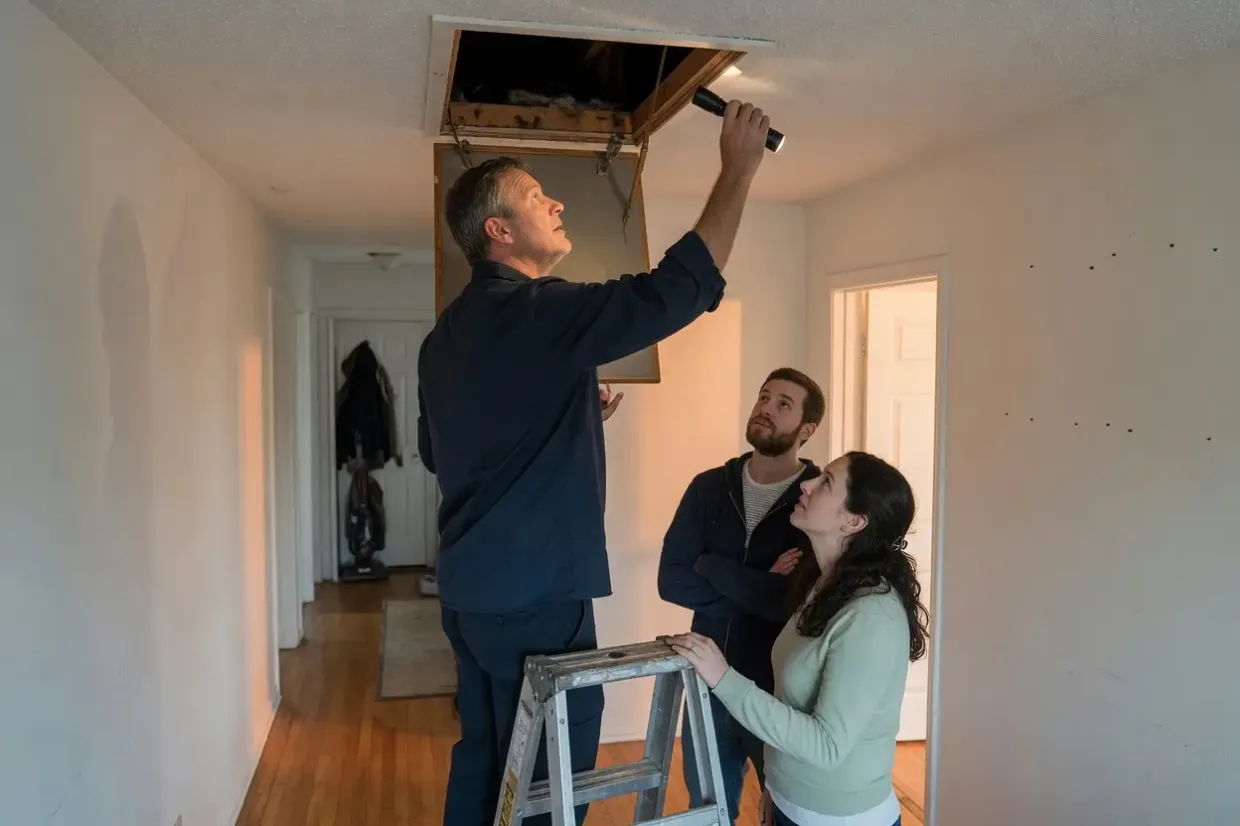
A professional home inspection checklist is the ten systems a licensed inspector has to cover, from the roof down to the doors and windows. Those ten are not somebody’s opinion. They are set by InterNACHI and ASHI, the two national inspector bodies. Below I walk each one in order, then the exclusions, because that is where buyers get hurt.
The Home Inspection Checklist: 10 Systems Every Inspector Must Cover
Most checklists you find online are somebody’s own set of categories. That is backwards, because a real one already exists in writing. InterNACHI’s Residential Standards of Practice names ten systems, from 3.1 Roof through 3.10 Doors, Windows and Interior. ASHI’s Standard of Practice lands on ten too, sections 3 through 12, in a different order.
Print the list if you want, but a home inspection checklist in your pocket counts for far less than the inspector’s written report. Walking the house yourself is no substitute for hiring one. I want that on the table before we name a single system.
- Roof. From the ground or the eaves: roof-covering materials, gutters, downspouts, vents, flashing, skylights, the chimney, other roof penetrations, and the general structure from accessible panels or doors.
- Exterior. Wall-covering materials, eaves, soffits, fascia, a sample of windows, all exterior doors, flashing, trim, walkways, porches, decks, railings, and grading that can push water toward the house.
- Basement, Foundation, Crawl Space and Structure. Four named things: the foundation, the basement, the crawl space, and structural components. Nothing else gets piled into this bucket.
- Heating. The heating system, run with its normal controls. That is an operation check, not a test of how well it heats.
- Cooling. Same idea for the cooling system, again on normal controls rather than a lab-style efficiency check.
- Plumbing. Main water and fuel shut-offs, water heating equipment, fixtures and faucets run for water, every toilet flushed, sinks tubs and showers drained, the drain-waste-vent system, and sump pumps with reachable floats.
- Electrical. Service drop, meter, main disconnect, panelboards, breakers and fuses, grounding and bonding, a sample of switches and receptacles, AFCI and GFCI testing where possible, plus smoke and carbon monoxide detectors.
- Fireplace. The parts of fireplaces and chimneys that can be seen and reached, plus lintels, damper doors that open by hand, and cleanout doors and frames.
- Attic, Insulation and Ventilation. Insulation and ventilation in unfinished spaces such as attics, crawl spaces and foundation areas. Also exhaust fans in the kitchen, bathrooms and laundry.
- Doors, Windows and Interior. A sample of doors and windows opened and closed, floors, walls, ceilings, stairs and railings, plus garage doors and openers on normal controls.
That is the whole scope, and mold, radon and pests are not on it.
What a Home Inspection Checklist Never Covers
Buyers read the report like a full medical workup, and I did too the first time. The catch is written into InterNACHI’s limitations and exclusions: an inspection is not technically exhaustive, and it will not identify concealed or latent defects.
Code compliance is out. So are repair cost estimates, mold, mildew and fungus, radon and other airborne hazards, lead paint, asbestos, rodents and insects. None of that is your inspector cutting corners, because it is written into the exclusion list in plain language.
| What the standards require | What the standards exclude |
|---|---|
| Ten systems, inspected visually | Anything not readily accessible |
| A written report on defects found | Concealed or latent defects |
| Roof leaks reported as needing correction | How many years the roof has left |
| Notes on anything present but not inspected | Repair methods, materials and cost estimates |
| Fixtures and appliances run on normal controls | Mold, radon, pests, lead paint, asbestos |
| Grading and drainage near the structure | Code compliance, boundary lines, buried tanks |
Obstructions stay put, and the inspector is not required to move furniture, rugs or wall coverings. They do not have to take a system apart. What you get is what a trained person could see in one visit.
Service life, market value and insurability are all outside the scope. So is the question of whether you should buy at all, and so is anything hidden behind a finished wall. Radon testing and pest inspections are separate tests you have to order and pay for. I have watched buyers skip radon simply because it was not on the inspector’s list.
An Appraisal Is Not an Inspection, and HUD Says So in Writing
People mix these two up during contract week, especially on FHA deals, so HUD wrote a whole consumer form to stop it. For Your Protection: Get a Home Inspection is blunt. FHA does not perform home inspections, and the inspection happens only if you arrange one.
An appraisal estimates the home’s value for your lender, and it does not replace an inspection. FHA does not guarantee the value or condition of your new home. If you find problems after closing, FHA cannot lend you money for repairs and cannot buy the home back from you. The government is not your backup inspector, and the form says so in writing.
HUD also tells buyers to ask the inspector for their Standards of Practice, or for a sample report. That is the ten-system home inspection checklist above. The same form notes that the EPA and the Surgeon General recommend that all houses be tested for radon. It tells you to ask about mold, air or water quality, asbestos, lead paint, urea formaldehyde insulation and pest infestations as extras.
How to Read the Report Without Panicking
A thick report feels like a dead deal. I have sat at kitchen tables while buyers treated the packet as a must-fix punch list. ASHI’s reporting duty asks for a written call on systems that are not functioning properly, significantly deficient, unsafe, or near the end of their service lives. Page count is not cost, and the labels matter a great deal more than the length.
The report also has to give recommendations to correct or monitor, or to call for further evaluation. It has to explain the reasoning where that is not obvious. And it has to name anything that was present but not inspected, with the reason why. Under the same standard, methods, materials and costs of corrections are not the inspector’s job.
So sort the findings into three buckets: safety, water, and systems near the end of their lives. Active roof leaks go in the water bucket, and InterNACHI requires those to be reported as needing correction. Use the report to decide what to price out, because it is not the price itself.
For context, start with the problems that most often fail an inspection rather than the page count.
Where Your Agent Helps, and Where They Have a Conflict
Good agents earn their keep after the report lands. They order the right specialist follow-ups, and they draft a repair request a local seller might actually sign. I have seen new buyers send the whole report back as a demand list, then watch the deal cool overnight.
Now the part you will not often hear from an agent. Every agent in the deal, ours included, gets paid only when it closes. Anyone reading you that report has a reason to keep it alive. That is the fee structure, not a slur on anyone.
So get your repair numbers from tradespeople rather than from an agent’s estimate, mine included, and stay willing to walk. A checklist and a friendly reading of it will not pay for a new roof.
On which repairs a seller can actually be forced to make, the contract and local custom matter far more than anyone’s gut. Price the work first, then decide whether this is still the house you wanted.
Our pay structure is different, and I am not going to pretend it washes the conflict out. Traditional buyer agents collect 3% of the sale price. We rebate half of that at closing, with a 1% minimum. That changes the size of the check, but it does not change the fact that we get paid when you close. Hold us to the same standard on repair prices. That goes for buying with a Houwzer agent in Philadelphia, and for any of the low commission realtors in Pennsylvania.
The report is the tool. The agent is the interpreter. Keep those roles apart in your head.
The Money: What the Inspection Costs and What the Agent Costs
The inspection is the cheap line in the deal. Commission is the big one you can still influence, so I put the two side by side on purpose. For what a home inspection actually costs, read our cost guide rather than trusting a hallway number.
The NAR median existing-home price for July 2026 was $434,100 across all housing types. At that price, a 3% buyer-agent commission comes to $13,023. Half of that rebated back to you is 1.5%, or $6,511. Our 1% minimum on the same price is $4,341.
Actual commission and rebate vary based on the seller’s commission offering, lending criteria and state law. Sellers typically offer the buyer broker between 2% and 3%. On average, buyers receive $5,000 to $10,000 back from the Houwzer home buyer rebate, though it varies with the deal.
Here is the point of putting them together: a free home inspection checklist is not what protects a $434,100 decision. The inspector’s report does, and so does the money you keep.
Home Inspection Checklist FAQs
How many items are on a professional home inspection checklist?
Ten. InterNACHI lists ten systems, from 3.1 Roof through 3.10 Doors, Windows and Interior. ASHI lands on ten sections too, numbered 3 through 12, in a different order. Homemade lists often add buckets for radon, pests or code checks that both standards exclude. Stick to the ten on the home inspection checklist, then buy the extra tests on purpose.
Does a home inspection checklist include mold, radon, or termites?
No. The inspector is not required to determine mold, mildew or fungus, airborne hazards including radon, or insects and other pests. Those are separate paid tests you have to request, so order them early if you want them. The visual pass will not quietly include them, and nothing in the report will flag that they were skipped as a problem.
Is a home appraisal the same as a home inspection?
No. An appraisal estimates value for your lender, and it does not replace an inspection. An inspection looks at physical condition, the remaining useful life of major systems, and items that need repair or replacement. It only happens if you arrange it. FHA does not guarantee the value or condition of the home and will not fund repairs after closing. Do not let a clean appraisal talk you out of the inspection.
Will the inspector tell me what the repairs will cost?
No. Inspectors are not required to determine correction, replacement or repair cost estimates, or the methods and materials of corrections. Get numbers from a contractor before you send a repair request, because a long report can still be cheap to fix. I have told buyers the same thing after ugly reports: cost comes from bids, not from highlighting.
Can I just use a home inspection checklist myself instead of hiring an inspector?
No, and I would not try. Using a home inspection checklist yourself is worth far less than a licensed inspector’s written report. You will not spot latent defects, you cannot take anything apart, and you will not have a document the seller has to answer. Hire the inspector, read the exclusions, and stay willing to walk away.

