

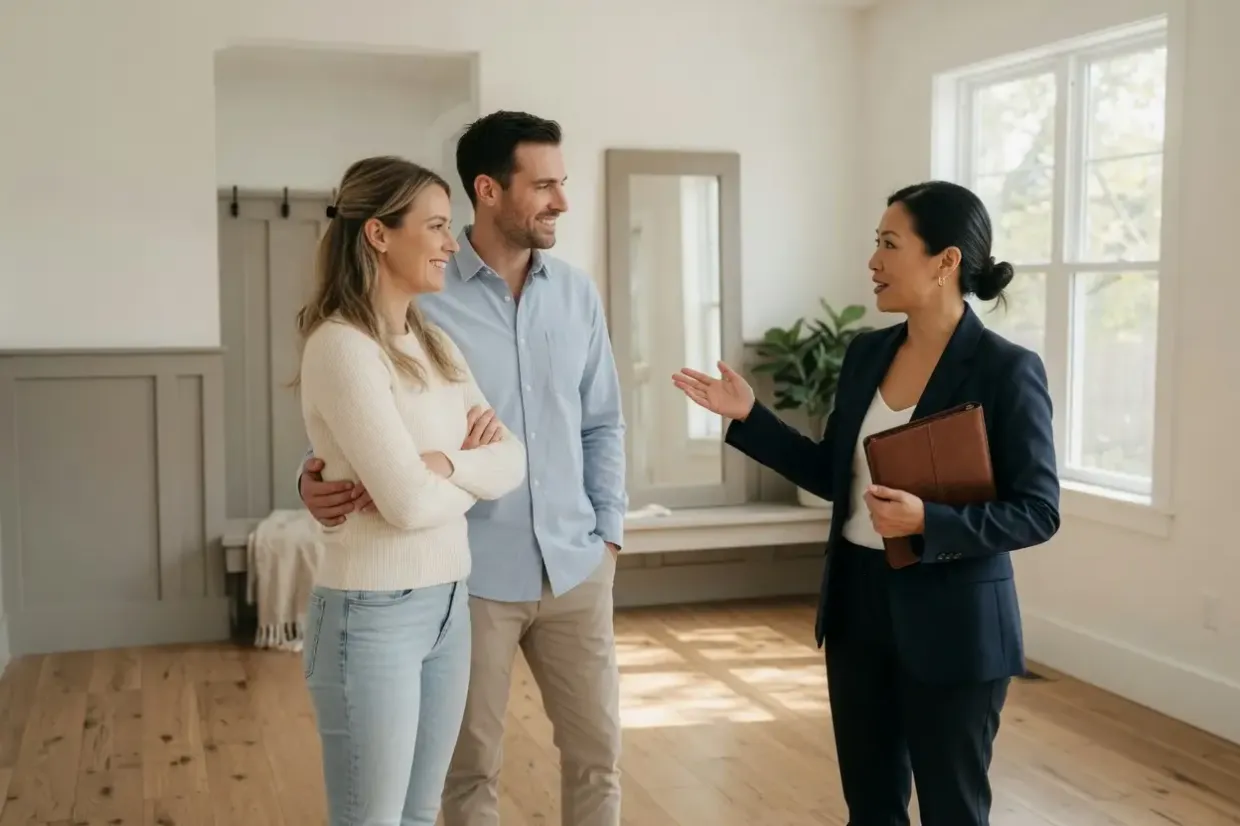
Do I need a realtor to buy a house? Legally, no. No state requires a buyer to have one, and you can tour, offer, and close on your own. But since August 2024, buyers sign written agreements and negotiate their agent’s fee directly, so the real question is whether the work an agent does is worth a fee you can now see, cap, and partly get back.
I’m David Speers, a prop-tech and real estate analyst, and I hear “do I need a realtor to buy a house?” more than almost any other question. Usually from first-time buyers who just watched a TikTok about skipping the agent and pocketing 3%. The honest answer has more moving parts than that video let on. So let’s walk through it with real numbers.
Why “do I need a realtor to buy a house” is a different question in 2026
For decades the standard answer was “sure, use an agent, it’s free.” That was always a half-truth. The buyer’s agent was paid out of the seller’s commission, which was baked into the price you paid.
Then the NAR settlement took effect on August 17, 2024, and two things changed. Offers of buyer-agent compensation came off the MLS. And agents who are MLS participants now need a written buyer agreement with you before touring a home. NAR’s own FAQ spells out the trigger: the requirement applies to agents “working with” buyers and kicks in at “touring a home.”
That agreement states what your agent charges. The number is not set by law and is fully negotiable, which is the exact disclosure language the settlement requires. I went through that contract clause by clause in my guide to the buyer agency agreement, including the protection period most agents never explain. Sometimes the seller still covers it as a concession. Sometimes you pay part of it yourself.
So the fee went from invisible to itemized. Which is uncomfortable, honestly. But it also means you can shop for it, cap it, and choose an agent whose model gives some of it back. More on that below.
What you’d be taking on without an agent
Here’s the part the skip-the-agent videos skim past. The listing agent on that house you love works for the seller. Their legal duty is to get the seller the best price and terms. If you show up unrepresented, they don’t become your advocate. In some cases they’ll offer to “handle both sides,” which is dual agency, and it’s restricted or flat-out illegal in several states. I wrote about why dual agency is sometimes illegal if you want the full picture.
Going solo, the job list looks like this:
- Setting your offer price from actual comparable sales, not the listing price or a portal estimate
- Writing a legally binding purchase contract with the right contingencies for your state
- Negotiating repairs after inspection, when thousands of dollars move in a single email
- Tracking deadlines: earnest money, inspection windows, appraisal, financing, closing
- Reviewing the Closing Disclosure, which your lender must deliver at least three business days before closing per the CFPB, and catching errors before you sign
None of that is impossible. People do it. But you’re doing it for the first time against a listing agent who does it every week, on the largest purchase of your life. That asymmetry is the real cost of going alone, and I’ve reviewed enough busted deals to say it plainly: the mistakes don’t show up at the offer stage. They show up at repair negotiation and closing, where an unrepresented buyer has no one checking the math but themselves. My full breakdown of what a realtor actually does covers which of those jobs move real money.
When the answer to “do I need a realtor to buy a house” is no
I’m not going to pretend everyone needs an agent. Three situations where skipping representation can make sense:
You’re buying from family or a friend. Price is agreed, nobody’s negotiating, and a real estate attorney can paper the deal for a fixed fee that’s far less than a commission. This is the cleanest case.
You’re an experienced investor. If you’ve closed multiple deals, know your market’s contract forms, and have an attorney and inspector on speed dial, you’re not the person this article is worried about.
You’re buying new construction and you’ve done it before. No law says you need an agent at a builder’s sales office. Just know the friendly on-site agent works for the builder, and builder contracts are written by the builder’s lawyers. First-time buyers, I’d still bring my own agent here, and the builder frequently pays that fee anyway.
Outside those three? The math rarely favors going alone, because the discount you’re imagining usually doesn’t materialize. When no buyer’s agent is involved, the seller’s side doesn’t automatically hand you the difference. You have to negotiate for it, which is itself the skill you gave up.
What the July 2026 numbers say about deals going sideways
NAR’s REALTORS® Confidence Index for July 2026 puts numbers on how often transactions wobble. In the prior three months, 6% of contracts were terminated outright and 12% had delayed settlements. Contracts typically closed in 30 days. So roughly one deal in six missed its expected path, and that’s among transactions where agents were involved.
Two more data points from the same report worth sitting with. Homes listed received an average of 2.0 offers, so you’re still competing. And 26% of buyers paid all cash, which means in a multiple-offer situation you may be up against buyers who can waive financing entirely. First-time buyers were 29% of purchases in July. If that’s you, you’re the person with the least room for a five-figure mistake and the most to gain from someone who’s seen a hundred of these contracts.
So if you’re asking “do I need a realtor to buy a house in a market like this,” the July data is most of my answer. A knowledgeable friend can’t fix a bad appraisal at the eleventh hour. An agent who has handled that exact call before usually can. That’s the difference between the 6% and everyone else.
Who pays the buyer’s agent now, and how much
Post-settlement, buyer-agent compensation gets sorted deal by deal. In practice, most sellers still offer to cover some or all of it as a concession, because it widens their buyer pool. But your written agreement sets the ceiling: your agent cannot collect more than the amount you signed for, no matter what the seller offers.
Here’s what the fee looks like on NAR’s June 2026 national median sale price of $440,600:
| Buyer-side fee | Cost on $440,600 | Who typically pays |
|---|---|---|
| 3.0% | $13,218 | Negotiated: seller concession, buyer, or split |
| 2.5% | $11,015 | Negotiated: seller concession, buyer, or split |
| 2.0% | $8,812 | Negotiated: seller concession, buyer, or split |
| Agent with a 1% buyer rebate | Up to $4,406 back to you at closing | Agent shares their commission with you |
Read that last row again, because it’s the option most buyers don’t know exists. The choice isn’t only “pay for an agent” or “go alone and hope.” There’s a third path where the agent’s compensation still comes through the deal, and the agent hands a chunk of it back.
How a 1% buyer rebate flips the math
This is where I’ll tell you what Houwzer does, since it’s the model I know best. Houwzer’s salaried agents share their commission with you as a buyer rebate worth up to 1% of the purchase price, cash back at closing you can put toward your down payment, buying down your rate, or covering closing costs. Details vary by state, county, and lender, and some lenders restrict rebate use, so confirm what applies in your market. On that $440,600 median home, up to $4,406 comes back to you. Buying at $600,000, up to $6,000.
Compare the two paths honestly. Go unrepresented and you take on the contract, the deadlines, and the repair negotiation yourself, with no guarantee the seller’s side gives you a dime of the savings. Use a rebate-model agent and you get full representation, and the visible, guaranteed number lands on your side of the ledger. That’s why my answer to “do I need a realtor to buy a house” is usually: no, you don’t need one, but going without one is the only option on the table that pays you nothing for the risk.
If you go the represented route, pick well. Interview more than one, and ask pointed questions about fees and rebates up front. I keep a list of 15 questions to ask a realtor and a guide on how to choose a real estate agent for exactly this. Buying in a market like Philadelphia, where rowhome inspections and city transfer taxes have their own quirks, a local low-commission agent earns their fee fast.
FAQ: do I need a realtor to buy a house?
Is it legal to buy a house without a realtor?
Yes, in all 50 states. You can contact the listing agent directly, view the home, and submit an offer yourself. Some states require an attorney at closing, but none require a buyer’s agent. So the answer to “do I need a realtor to buy a house” is technically no everywhere. The listing agent still represents the seller, though, so you’d be negotiating without an advocate.
Do I save money if I skip the buyer’s agent?
Usually less than you’d think. The savings only exist if you negotiate the price down by the amount of the unused buyer-side fee, and the seller’s side has no obligation to agree. Meanwhile a rebate-model agent puts a defined amount, up to 1% of the price, back in your pocket while still representing you.
Do I need a realtor to buy a house from a builder?
No. But the on-site sales agent works for the builder, and the contract is the builder’s document. If you bring your own agent to your first visit, the builder typically pays their fee, and you get someone reviewing upgrade pricing and contract terms who answers only to you.
Do I have to sign a buyer agency agreement before touring homes?
If you’re working with an agent who participates in the MLS, yes. Since August 17, 2024, written buyer agreements are required before touring. The terms are negotiable, including the fee, the length, and which properties it covers. Read it before you sign, and ask for a short trial period if you’re unsure.
How much does a buyer’s agent cost in 2026?
Typically 2% to 3% of the purchase price, set in your written agreement, and it’s fully negotiable. On the $440,600 national median that’s $8,812 to $13,218. Sellers often cover some or all of it as a concession. My guide to the buyers agency fee breaks down who pays it and every lever you have.
The bottom line
You don’t need a realtor to buy a house. You never legally did. What you need is someone on your side of a 30-day, six-figure negotiation where 6% of contracts die and 12% close late, and where the other side has professional representation. For a small group of buyers, an attorney fills that role fine. For most people, especially the 29% buying for the first time, the smart 2026 move isn’t skipping the agent. It’s choosing one whose fee structure works for you, and with a 1% rebate on the table, the agent can literally be the option that pays you.

